We are making some significant changes to the CSA for next year. In 2027, Tubby Creek Farm will be going “old school” by taking our Community Supported Agriculture (CSA) program back to its roots. We are going to focus all our energy on growing food for 125 Farm Shares. Everything we harvest on the farm will be divided evenly among those 125 shares. The cost of the Farm Share will reflect the true cost of growing food rather than the market value of the produce we distribute.
A new old model
In this CSA model, each Farm Share Member would pay an equal proportion of our total cost of production for the year. Instead of relying on profits to pay the farmer, the farmer’s salary is included in the cost of production. In return, each Share will get an equal proportion of the total harvest. That means on weeks that the farm produces more, you get more. On weeks the farm produces less, you get less. I will do my best to plan for consistency, but variability is the norm.
How is that different from what we’ve been doing?
For the past 15 years we’ve been doing CSA in a pretty typical way. We charge a fixed amount for each box. Each week we put produce in the box to equal that value based on a market value that we assign to each crop. For example, if you pay about $30 a week, the produce in the box would cost you about $30 if you were to purchase it all individually at the farmers market. The cost of the CSA is based on the market value of the produce. Each week, the CSA gets roughly same dollar value of produce, regardless of how much the farm produces.
Taking a sabbatical from farmers markets in 2027
Because we will be focusing all our energy on growing for CSA, we will not be selling at farmers markets in 2027. We are incredibly appreciative of our farmers market customers, and we know this news will disappoint many people. We know many of you have been shopping with us for years and years and we are exceedingly grateful. But we also know that we can’t do it all, and we have decided to take one year and focus solely on the Farm Share model.
We will have more information coming soon about why we are making this change, how the cost of production is calculated, and specifics about next year (price, drop-sites, length of season, etc.)

Small Shares
- Sweet Potato
- Green Peppers
- Winter radish: watermelon or purple daikon*
- Juliet Tomato
- Curly Kale
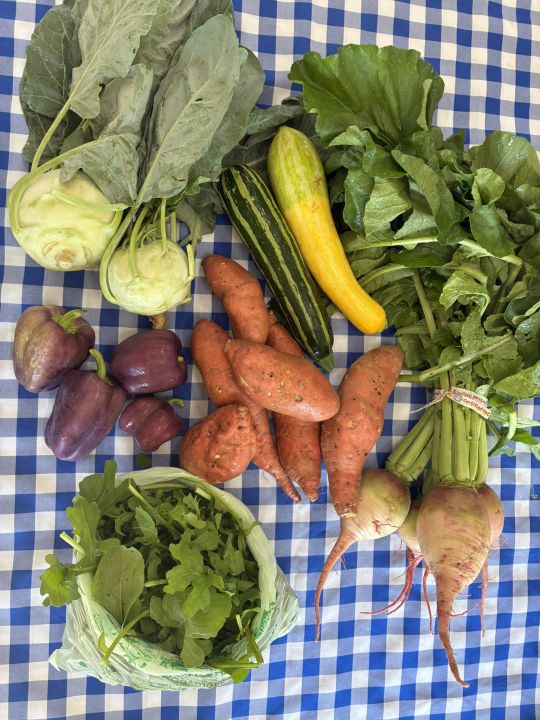
Full Shares
- Sweet Potato
- Green Peppers
- Winter radish: watermelon or purple daikon*
- Arugula
- Kohlrabi
- Summer Squash
*we have intentionally left the greens on your winter radishes. You can treat them like turnip greens. Cook them by themselves or mix with other greens. Winter radishes are great for eating raw with dip, oven roasting, or adding to soups and stews.


You must be logged in to post a comment.